Cooperative motif enrichment
PMET
Paired Motif Enrichment Tool identifies cooperative transcription factor activity across homotypic and heterotypic motif combinations.
Analysis entry points
Choose the run that matches your inputs
PMET keeps fast pre-indexed workflows and fully custom uploads in the same interface, so users can move from screening to bespoke analysis without changing tools.
Use Built-in Species
Pick a pre-indexed plant species + motif database; just upload a gene list. Fastest path.
Start AnalysisBring Your Own Genome
Build the index from your own genome FASTA + GFF3. Use this for unsupported species or custom promoter parameters.
Build Custom RunPeak / Interval Sequences
Run motif co-occurrence on arbitrary regions (ATAC-seq / ChIP-seq peaks, etc.); skips the promoter-extraction step.
Analyze IntervalsVisualize Results
Open existing PMET output files as interactive heatmaps, histograms, and searchable tables.
Upload ResultsJob lifecycle
From files to ranked motif pairs
Upload Data
Provide the gene list and any required reference files.
Tune Parameters
Set motif-hit depth, FIMO threshold, promoter length, and pairing options.
Run Worker
The job is queued and executed asynchronously on the backend worker.
Review Results
Download the result archive or explore significant motif pairs visually.
Method context
Understand what PMET is measuring
What is PMET?▾
PMET (Paired Motif Enrichment Tool) identifies motif pairs that co-occur in the promoters of a user-supplied gene set significantly more often than in the genome-wide background.
- Input — a target gene set (e.g., heat-shock genes, cell-type up-regulated genes) plus a reference promoter universe.
- Test — for every motif pair, build a 2×2 contingency table (target vs. background × with-pair vs. without-pair) and run a hypergeometric test.
- Correction — apply BH or Bonferroni multiple-testing correction across all motif pairs.
- Output — a ranked list of motif pairs with adjusted p-values, surfacing candidate cooperating TFs.
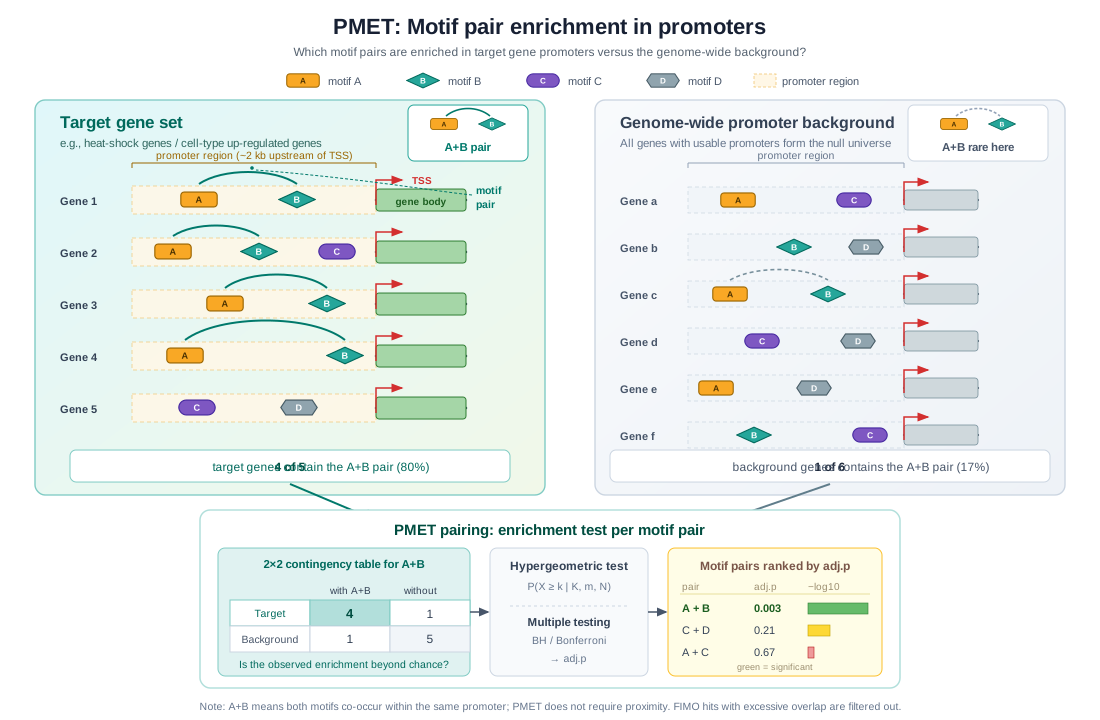
PMET asks whether two motifs co-occur on the same promoter in the target gene set more often than expected by chance.
PMET Workflow▾
PMET splits the computation into two stages so the expensive motif-scanning work is paid only once per genome × motif database.
- Indexing stage (expensive, reusable) — scan the entire genome for motif occurrences and build a homotypic index. Done once per genome × motif DB.
- Pairing stage (cheap, per-query) — reuse the index to compute pair enrichment for any user-supplied gene list, in seconds to minutes.
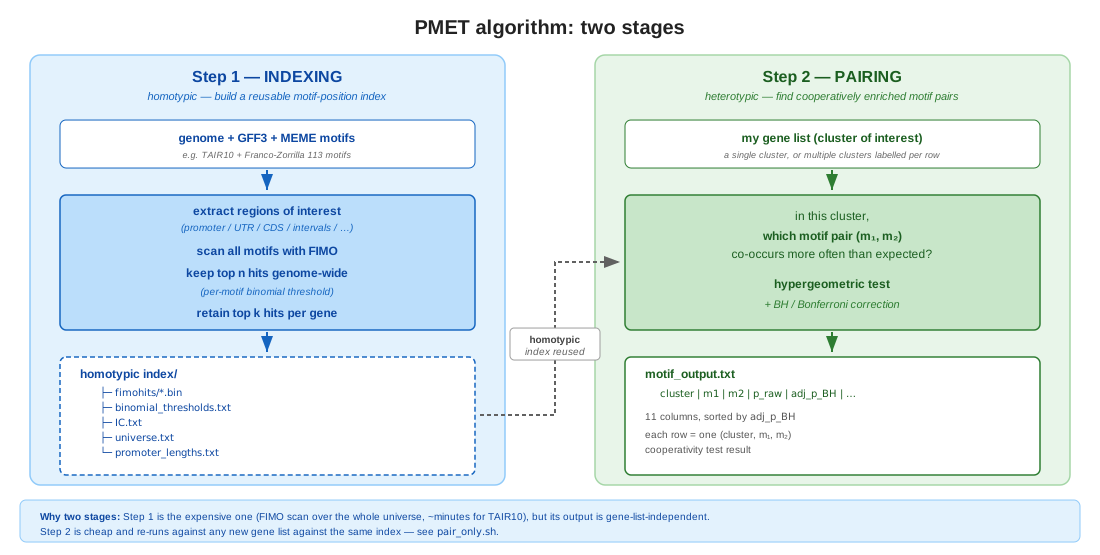
Indexing is the bottleneck; once cached, every subsequent gene-list analysis is fast and reproducible.
Mode-specific Pipelines▾
PMET offers four entry modes for different input types. All converge on the same homotypic-index schema and the same heterotypic pair-test engine.
- promoter — extract promoter regions from a genome and GFF3 annotation, then scan and pair (the most common workflow).
- intervals — operate directly on user-supplied regions (ChIP-seq peaks, ATAC regions, etc.), skipping promoter extraction.
- elements — use a predefined set of regulatory elements as the scan universe.
- pair_only — skip indexing entirely; run pair enrichment against an already-built index.
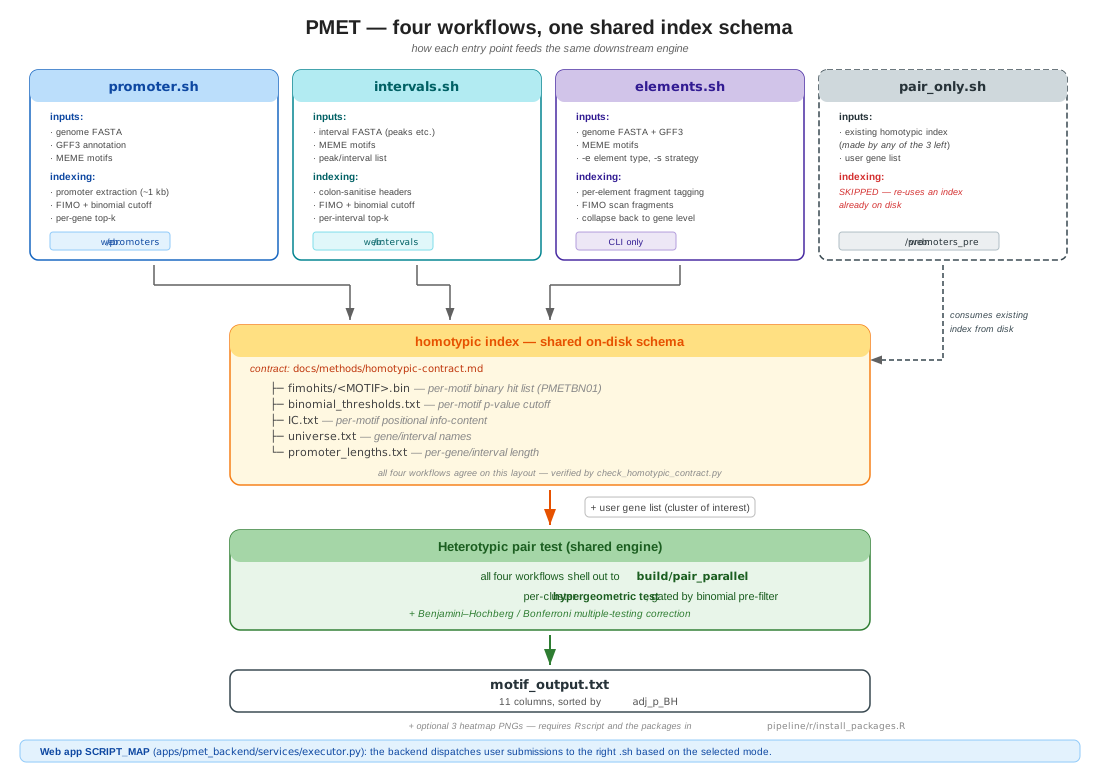
Four entry points feed the same homotypic-index schema, then the same heterotypic pair-test engine.